Is BMI Fair to African Bodies? What the New Diabetes Guidelines Actually Say
A clinician's take from the 2026 American Diabetes Association Scientific Sessions
By Dr. Genevieve, DNP | Vieve Health & Wellness
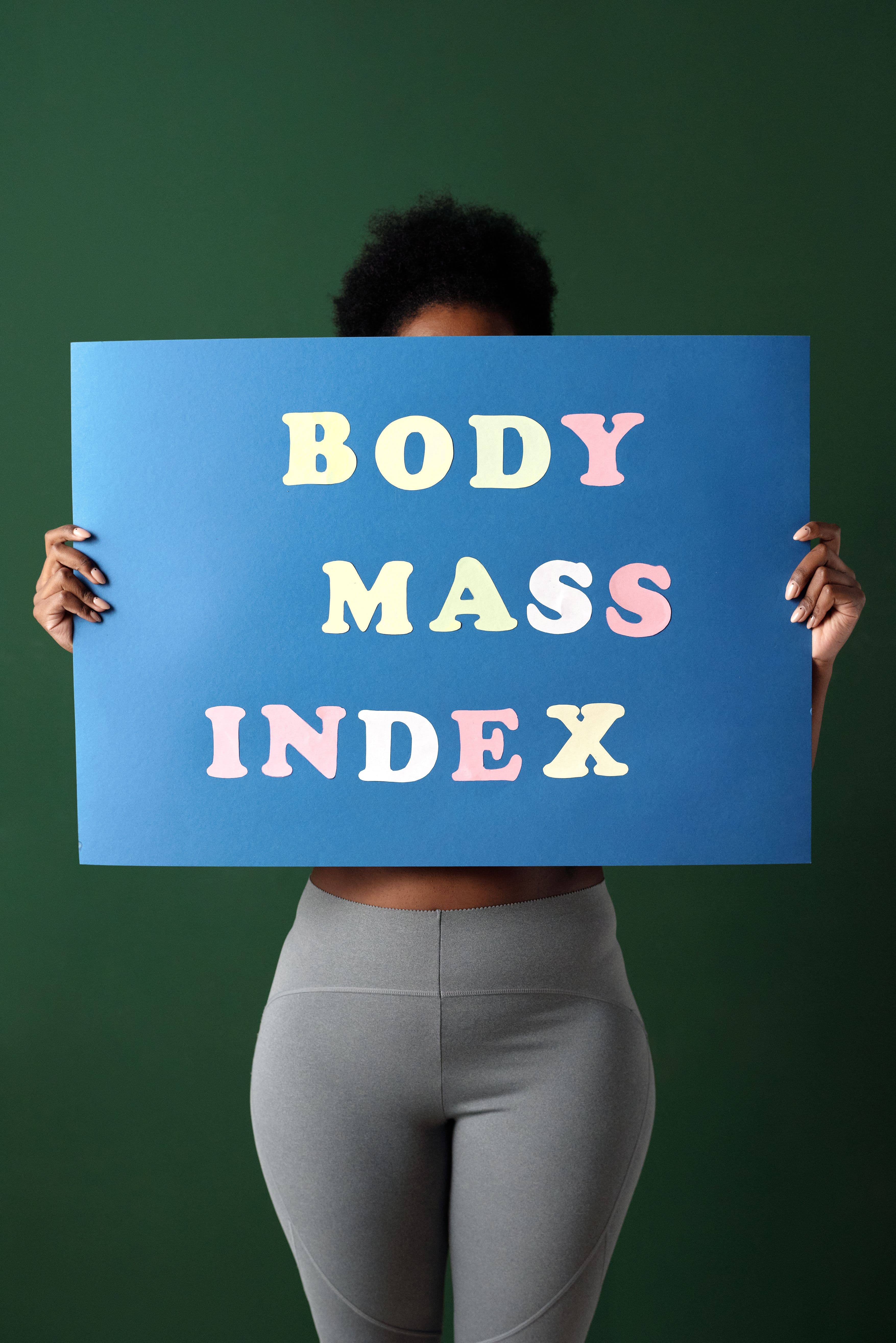
If you have ever stepped on a scale at the doctor's office, had your height measured, and then been handed a single number that decided whether you are "normal," "overweight," or "obese" — you have met BMI. And if you have ever looked at that label and thought, but this doesn't match how I actually feel or look, you are not imagining things.
This question — whether the Body Mass Index treats every body fairly — came up repeatedly at this year's American Diabetes Association Scientific Sessions in New Orleans, where I spent the week. And for the first time, the diabetes guidelines themselves now say something many of us in our communities have felt for years: BMI alone is not enough. Let me explain what changed, and what it means for you and your family.
First, what is BMI — and why do we use it?
BMI is a simple calculation: your weight divided by your height squared. That is its whole appeal — it is cheap, fast, and needs nothing more than a scale and a measuring tape. Doctors and insurers have leaned on it for decades because it is easy to capture for millions of people at once.
But "easy" and "accurate" are not the same thing. BMI was never designed to measure the one thing that actually drives diabetes and heart risk: where your body stores fat, and how much of you is muscle versus fat.
Where BMI gets it wrong
The new 2026 diabetes guidelines are unusually frank about BMI's blind spots. In their own words, BMI does not measure how fat is distributed around the body, and it does not account for whether that weight is causing any actual health problems. The guidelines specifically flag two situations where the number misleads:
- Very muscular people get over-labeled. A strong, athletic person carrying a lot of muscle can be told they are "obese" by BMI, even though they are metabolically healthy. Muscle is heavy.
- People with little muscle get a false pass. Someone with low muscle mass can have a "normal" BMI while carrying dangerous fat around their organs.
And here is the part that speaks directly to our communities: the guidelines acknowledge that BMI is especially prone to misclassification in populations with different body composition and different patterns of risk. In plainer terms — a one-size-fits-all number, built largely on one kind of body, does not fit every body equally well.
The shift: measuring the middle, not just the math
Here is the encouraging change. The 2026 Standards now recommend that BMI no longer stand alone. To confirm whether someone truly carries excess fat, clinicians are urged to add at least one measurement of where the fat sits — most simply, a measuring tape around the waist.
The guidelines point to measures like:
- Waist circumference — how big around your middle is.
- Waist-to-hip ratio — your waist measurement compared to your hips.
- Waist-to-height ratio — a simple rule of thumb is keeping your waist to less than half your height.
Why the waist? Because fat stored deep in the belly, around your organs, is the kind most strongly tied to insulin resistance, type 2 diabetes, and heart disease. Two people can share the exact same BMI — one carries their weight in the hips and legs, the other in the belly — and face very different risks. The tape measure catches what the scale misses.
So — is BMI fair to African bodies?
The honest answer is: BMI was never calibrated with us at the center, and the experts now openly recommend cutoff points appropriate to age, sex, and ethnicity rather than a single universal line. The guidelines even single out certain populations — South Asian people, for example — who develop metabolic risk at lower BMIs than the standard thresholds would catch.
For people of African descent, the picture is its own conversation. Many of us carry more muscle and denser builds, which can push BMI up without the matching health risk — meaning BMI may sometimes overstate risk. At the same time, diabetes and high blood pressure run heavily through our families, often appearing earlier than expected. So the lesson is not "BMI says we are fine" or "BMI says we are doomed." The lesson is simpler and more empowering: one number cannot tell your story. Look deeper.
What you can actually do
- Grab a tape measure. Measure your waist at the level of your belly button, standing relaxed. Track it over time. A shrinking waist is often better news than a shrinking number on the scale.
- Use the half-your-height rule. Aim to keep your waist under half your height. It is a quick, no-math check you can do at home.
- Ask for more than BMI at your visits. You are entitled to ask your provider about your waist measurement, your blood sugar, your blood pressure, and your cholesterol — the numbers that actually describe your health.
- Don't let a label define you — in either direction. A "normal" BMI is not permission to skip checkups, and an "obese" label is not a verdict. Both are starting points for a fuller conversation.
The bottom line
BMI is a tool, not a truth. The newest diabetes guidelines finally say out loud what our communities have sensed: a single number, built without us fully in mind, cannot capture the richness and variety of our bodies. The better path is to add the tape measure, ask for the deeper numbers, and judge your health by how your body actually functions — not by one label on a chart.
You are more than a number. Let's measure what actually matters.
This article is for general health education and is not a substitute for personalized medical advice. Talk with your own healthcare provider about how to assess and manage your individual health.